
Senate confirmation for nominees to Immigration Board put on hold
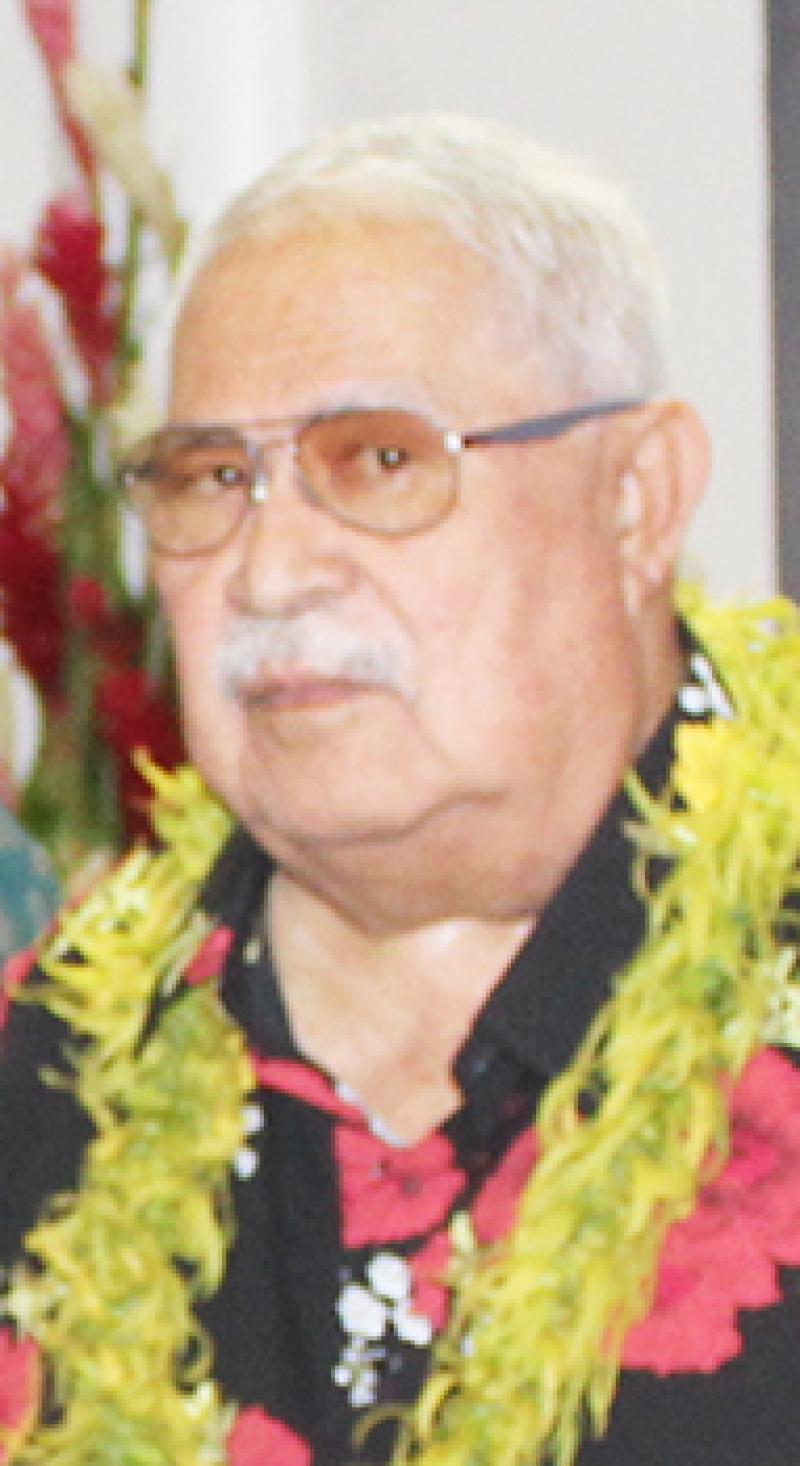
Pago Pago, AMERICAN SAMOA — The Senate’s confirmation vote for five nominees to the Immigration Board has been put on hold by Senate President Tuaolo Manaia Fruean, who is seeking clarification from the Pula‑Pulu administration on whether members of the Fono should continue serving on the Board. The issue surfaced during last week’s hearing on the bill proposing a 12‑month moratorium on the special provision in immigration law.
It marks the second time in recent weeks that Fono leaders have clashed with Governor Pulaali‘i Nikolao Pula over the interpretation of government rules and regulations. Just last month, the Fono approved a concurrent resolution declaring that the Governor’s executive order transferring the Department of Corrections to the Department of Public Safety (DPS) was invalid and without legal effect.
This time, the Senate President admitted that while the law does not require Fono members to serve on the Immigration Board, previous administrations have consistently appointed lawmakers as a matter of courtesy and continuity. The long‑standing practice, he said, has been for the Senate President to forward a nominee to the Governor, who then submits the name to the Fono for confirmation alongside the rest of the Board appointments.
During last week's moratorium hearing, Tuaolo noted that he had previously advised the Governor to retain Senator Levu Iosia Jr. as a member of the Immigration Board. However, when the Governor submitted his list of nominees, neither Senator Levu nor Rep. Vailoata Amituanai — the Fono’s representatives — were included.
Attorney General Gwen Tauiliili‑Langkilde said she believed Senator Levu’s term on the Immigration Board had not ended. She also said she had not seen the Governor’s letter with the new nominees and would review the law before giving an official answer.
The Senate held its first confirmation hearing in March for the Governor’s nominees to the Immigration Board: Tuiteleleapaga Filoalii Ioane Lamatia, Fa’alaga Su’e, Sina Ameperosa Samuelu, Taufetee Tanielu Taufetee, and Tago Tafaevalu Aumoeualogo. A sixth nominee, Anthony Aetonu, was off‑island at the time, and senators were informed that another nominee, Satele Lili’o Satele, had declined the appointment.
Senate President Tuaolo said he did not want the current questions about Board membership to affect the confirmation vote. He said it would be better to postpone the vote until the issue is clarified.
In March, Governor Pulaali‘i vetoed a bill passed by the Fono that would have required one Senator and one House Representative (faipule) to serve on the Immigration Board. The bill also sought to automatically remove any ASG employee from the Board once they leave government service.
In his veto message, the Governor agreed with the Fono that the Immigration Board plays an important role in oversight, transparency, accountability, and responding to community needs. He also acknowledged that lawmakers bring valuable perspectives from their districts.
However, he disagreed with the idea of placing Senators and Faipule on a board that performs what he described as an Executive Branch function. He argued that doing so would force lawmakers to divide their constitutional responsibilities between their constituents and the Executive Branch. He also said mixing Executive‑appointed members with Legislative‑appointed members creates problems for the separation of powers.
According to the Governor, lawmakers appointed to the Board would either end up overseeing their own work or be overseen by the same legislative leaders who appointed them. “To me, this does not square with the necessary and proper design of our constitutional framework,” he said.
Ironically, a similar situation unfolded last year involving Senate President Tuaolo, who also serves as chairman of the American Samoa Government Employees’ Retirement Fund (ASGERF) Board of Trustees, and board member Keniseli Lafaele. Their disagreement escalated to the point where Tuaolo sent Lafaele a letter stating that “the Board will proceed with the necessary steps to remove you from the board in accordance with governance procedures.”
Lafaele later filed a court complaint challenging his removal before his term ended. The lawsuit named Tuaolo, Loa Tauapa‘i Laupola, Tony Togia‘i, and Toloa‘i Ho Ching as defendants, along with ASGERF and the American Samoa Government as necessary parties.
In his final presentation in court, legal counsel Charles Alailima, who represented Lafaele, raised the issue of legislators serving as trustees, arguing that the American Samoa Government’s response on this point was vague and at times even contradictory.
"A member in legislation who enforces law as an appointed member in an executive board, one could reasonably find legislative encroachment of Executive power based on the theory of distinct powers of branches. Legislative power, as distinguished from executive power, is the authority to make laws, but not to enforce them or appoint the agents charged with the duty of such enforcement. The latter are executive functions.
"Where statutes outline the purpose and duties of an executive board which directly impacts government employees and their functions, one could find an imbalance in board members who have both the power to make and enforce those statutes.
"In further review of the statute, ASCA 7.1420(d) and 7.1421(6) provide 'members of the fund' to include 'members of the legislature and judges. Thus, one could reason that members of the legislature or judges could therefore be appointed by the Governor as Trustees to the ASGERF Board because they are expressed in the statute as 'members of the fund.'
"Additionally, given the authority vested in its functions of the executive branch, one could argue that the Governor determines whether a conflict of interest exists because the Governor holds the sole authority to appoint and terminate a member of the executive board under this statute."
Counsel Alailima then addressed the court and offered his interpretation of ASG’s position.
“ASG’s response, in essence, is saying, ‘No, we shouldn’t be doing this,’ but then at the end they add, ‘Maybe you could, if you clear up the conflicts of interest,’” he said. “You cannot have the President of the Senate sitting on a board whose actions will ultimately be reviewed by the standing committee of the Senate — of which he is the president.”
“That is simply not appropriate, and I believe, Your Honor, that the court should make that ruling so that everyone stays in their lane. They need to know where the boundaries are, and that is especially important in this case because if the court does not make a ruling, no one else seems willing to take that step to ensure that the law governing this agency is enforced.”
In its decision on the issue, the court ruled that the Retirement Board had overreached its authority to dismiss Lafaele, pointing out that only the governor has that authority through the governing statute of the government Retirement Fund.
Of note, It did not directly address the issue of conflicts of interest by members of the Fono that serve on boards whose actions are reviewed by the Fono itself.